“Educators respect and value the history of First Nations, Inuit, and Metis in Canada and the impact of the past on the present and future. Educators contribute towards truth, reconciliation and healing. Educators foster a deeper understanding of ways of knowing and being, histories, and cultures of First Nations, Inuit, and Metis.”
As more of the realities and impacts of the Canadian government’s treatment of Indigenous peoples come to light, we as teachers need to be part of the solution, not the problem. While it is impossible for us to entirely remedy the hurts of the past, we would do well to remember them and let our empathy and awareness aid us in building a better future for all.
My knowledge of Indigenous stories, histories, cultures and ways of knowing and being are far from sufficient for my liking, but on my educational journey I take whatever time I can to view pedagogy through that lens. One thing I can do is partake in the weekly Orange Shirt Day that many schools and staff observe every Wednesday. During my time as a substitute teacher, I have been able to hear many stories and witness many forms of Indigenous art and expression.
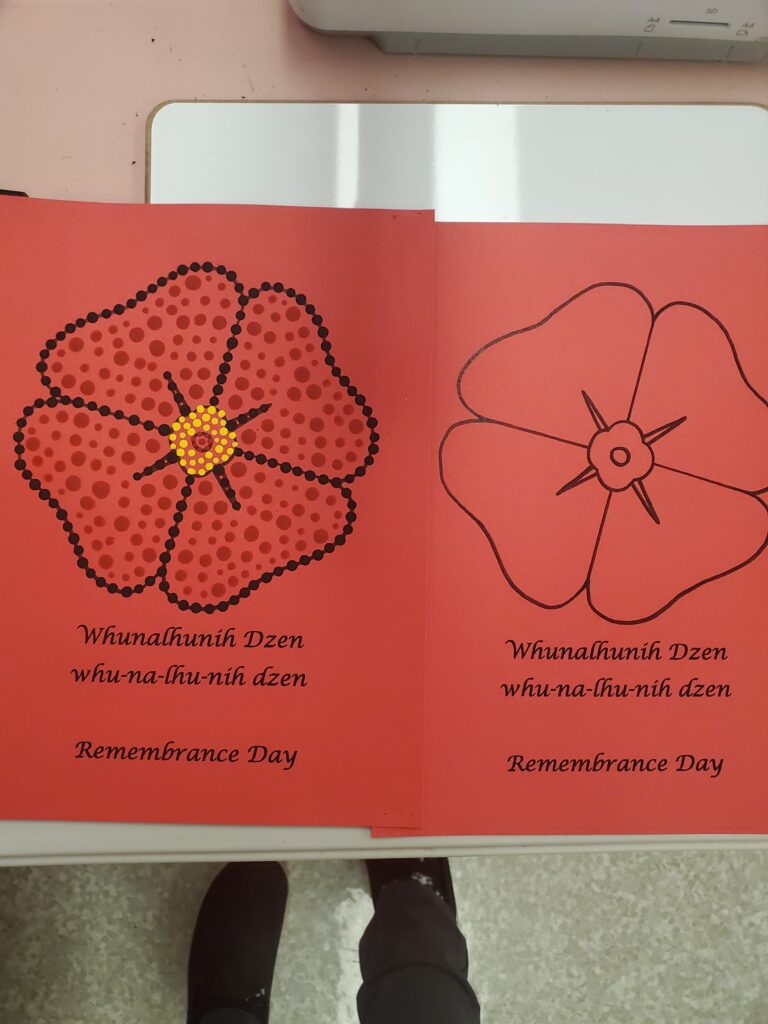
A Remembrance Day art project made one of the teachers at a school I was doing TTUC work at. This project was also accompanied by stories about Indigenous veterans.
By ensuring that we never lose sight of the importance of truth, reconciliation, and healing, we make sure history does not repeat itself. Projects like the one shown above offer new points of view on traditions such as Remembrance Day and the wearing of poppies to show respect for our soldiers and veterans. Another was an eagle feather assignment in which students wrote down on the paper feathers how school should make them feel, in contrast with how Indigenous children were made to feel at the residential schools that populated our country in the past. By maintaining our ties with the past, for better and for worse, the future for us and our students can be made a little bit brighter.